

A ramp team can lose ten minutes before anyone realizes the plan has slipped. A late belt loader, an unreported bag exception, or a missing tug can turn a routine turnaround into a delay. That can affect the next sector, trigger delay penalties, and create customer impact.
AI ground handling helps teams spot those issues earlier and prioritize the next response. It doesn’t replace the ramp supervisor’s judgment, and supervisors remain accountable for the response. It gives supervisors, allocators, and station managers a clearer view of live work, likely bottlenecks, and unresolved exceptions.
The strongest results in ground handling operations come from applying AI to a specific operational decision, then comparing the outcome with a measured baseline.
Book a Demo to explore how connected aviation technology can fit existing ramp, load, and baggage workflows.
Key Takeaways
- AI ground handling helps ramp teams identify likely delays, baggage exceptions, equipment risks, and resource gaps earlier so they can act before the departure window closes.
- The most effective tools support specific operational decisions, such as predictive task allocation, baggage reconciliation, predictive maintenance, and computer-vision safety monitoring.
- AI should connect live data across ramp, baggage, load control, maintenance, and airport systems while keeping supervisors responsible for approvals, exceptions, and local judgment.
- Successful pilots start with a repeatable problem, a measurable baseline, reliable integrations, mobile-friendly workflows, and a clear manual fallback.
- Operational outcomes, alert quality, staff adoption, data protection, and auditability should be measured alongside model accuracy.
Where AI ground handling earns its place
Artificial intelligence works best where ramp teams already collect large volumes of time-sensitive data. Flight schedules, stand changes, baggage scans, load figures, equipment telemetry, task status, and weather feeds all describe the same operation from different angles.
A useful system joins those signals for disruption forecasting, identifying the next likely risk and its operational cause. For example, it can flag that a crew assigned to a delayed inbound will miss the revised baggage delivery window, then propose a qualified alternative crew nearby.
Focus on decisions, not dashboards
More screens don’t improve airport operations. Useful turnaround management should support a clear next action, not another screen.
A practical tool interprets connected events and recommends that action, rather than simply moving data or triggering a fixed rule. It might reallocate a pushback crew, send a mechanic to a high-risk tow tractor, or escalate a bag that missed its expected scan.
Aircraft turnaround software can calculate predictions, but the shift lead still confirms local conditions. Congested service roads, crew fatigue, stand restrictions, and airline-specific procedures may not appear in the data.
A prediction has value only when the team can see the reason behind it and act before the departure window closes.
Start with repeatable pain points
Good early use cases have three traits: the process repeats often, data already exists, and the outcome has a measurable cost. Delayed baggage loading, missed service milestones, unavailable ramp equipment, and incomplete service capture meet that test.
Widerøe Ground Handling offers a useful operating example. The provider supports more than 100 airlines across 42 airports. Its deployment of a mobile, real-time ramp platform at 41 stations in 10 weeks replaced isolated manual processes with shared operational updates, stronger SLA tracking, and more accurate invoicing.
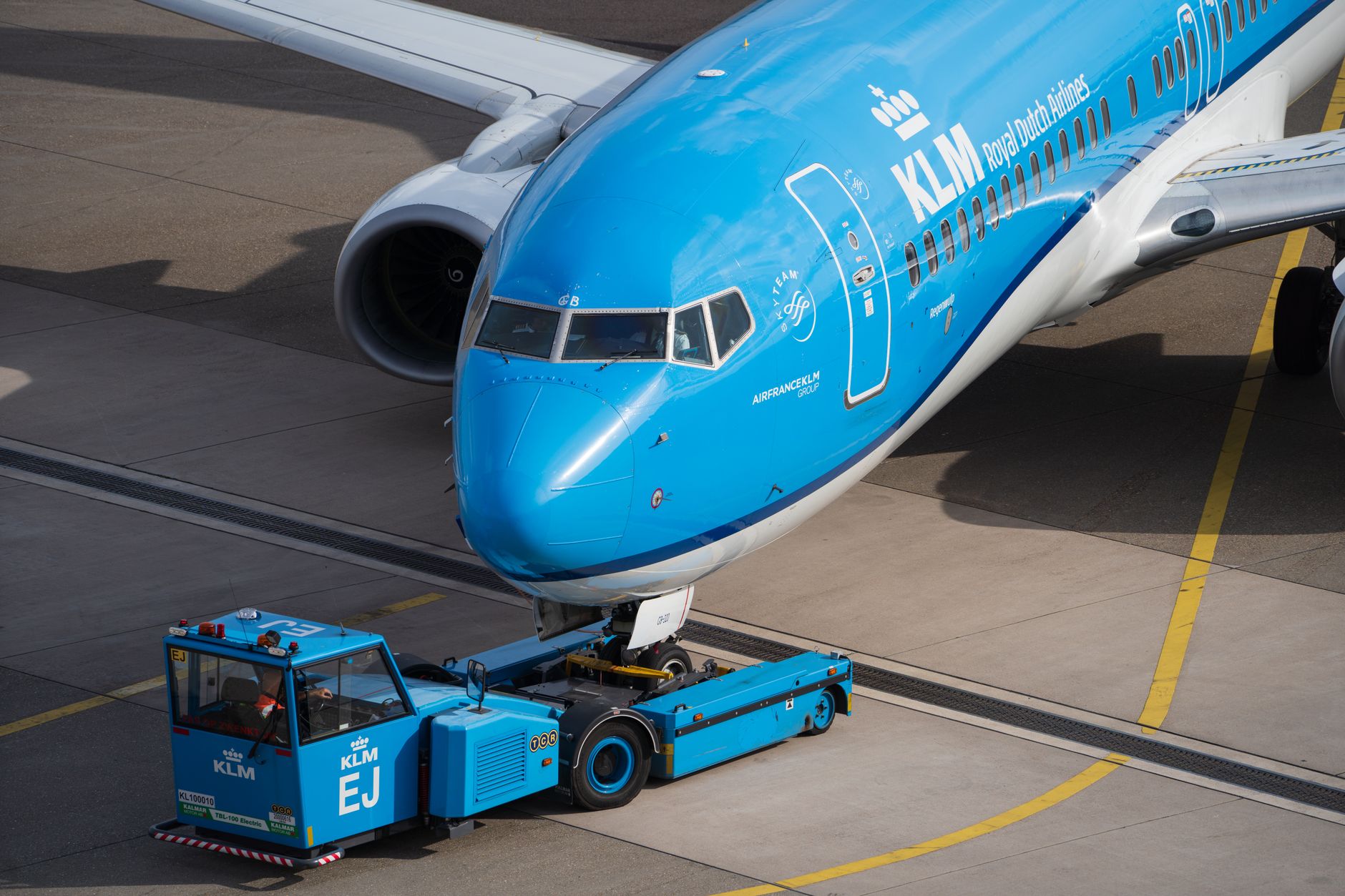
Photo by Martijn Stoof
Use predictive task allocation to protect the turnaround
Aircraft turnaround time covers the period from on-block arrival to off-block departure. Each activity has dependencies. Bags can’t be fully loaded until loading starts, doors can’t close until boarding finishes, and pushback cannot begin until the aircraft is ready and the area is clear.
AI can model these dependencies in real time. That makes it useful for ramp operations software, where one late event can trigger several others.
Allocate people and equipment against live constraints
Traditional allocation often relies on a central controller who calls stations, checks spreadsheets, and reacts to the latest disruption. A workforce management approach can consider qualifications, airside access, fatigue or break rules, current workload, and planned tasks. Predictive task allocation supports resource management and turnaround management by matching staff and equipment with locations, breaks, and flight priorities.
For instance, if an inbound arrives 18 minutes late, the system can identify a nearby trained team whose current task finishes before the revised on-block time. It can also confirm that the qualified crew, belt loader, tug, and other ground support equipment are available in the same zone.
This decentralizes routine decisions without removing control. The system ranks task allocation options, and local supervisors accept or reject them, recording the reason. Over time, that feedback improves rules and exposes recurring gaps in staffing or equipment coverage.
Connect ramp, baggage, and load control
A ramp plan becomes unreliable when each function sees a different version of the flight. Coordinated turnaround management depends on shared events across ramp teams, baggage systems, load control, airline operations, and the airport operational database.
When a final bag count changes, the load controller needs the update before final documentation. When fueling runs late or a stand changes, the ramp lead needs a realistic readiness forecast rather than a static plan. These links give teams one event sequence, but stale data or an unpropagated stand change should trigger a manual fallback.
AI recommendations should prioritize accurate, confirmed operational timestamps from live system integrations over attractive but disconnected visualizations.
AI in baggage handling starts with clean scan events
Baggage errors rarely have one cause. Tight connections, incorrect sortation, late gate changes, unreadable tags, loading mistakes, and weak handoffs can all break the chain. That is why airlines lose luggage, even when every team believes it completed its part of the process.
An airport baggage tracking system captures custody events. AI then helps identify scan gaps, unusual dwell times, and bags at risk of missing their flight.
Make reconciliation useful at the gate
A baggage reconciliation system (BRS) matches checked bags to boarded passengers and records whether the correct bags are loaded. In practice, a BRS software solution for airports gives the baggage supervisor an exception list before hold closure, rather than a post-departure mystery.
IATA Resolution 753 baggage reconciliation compliance depends on tracking bags at key handover points. Digital compliance creates an auditable record of these required baggage handover events. The International Air Transport Association’s industry role shows why IATA ground handling standards matter when bags pass among airlines, handlers, and airports.
Modern aviation baggage management software should support baggage tracking from check-in to arrival. It should also work with scanners, RFID readers, handheld devices, and departure-control data already in use. Role-based access helps protect passenger and baggage records as data moves between systems.
Prioritize the bag that needs attention
Real-time baggage tracking creates a large event stream. A supervisor doesn’t need every scan repeated on a screen. They need the system to prioritize a bag that hasn’t appeared at make-up, a transfer bag with a short connection, or an item loaded to the wrong flight.
This is where intelligent baggage tracking supports efficient baggage flow. Instead of searching broadly, the team gets a focused work queue with the bag’s last known scan, destination, flight cutoff, and suggested recovery action.
For baggage reconciliation system providers, the practical test is simple: can the tool improve end-to-end baggage visibility without creating extra work at the belt? A cloud baggage management system should also support IATA baggage compliance while keeping scan workflows fast enough for peak operations.
Keep ground support equipment available and ramp areas safer
A parked aircraft can still lose its slot when the required equipment is unavailable. A failed tug, defective GPU, or belt loader with a hydraulic fault can create delays that spread through the stand plan.
Predictive maintenance uses sensor trends to identify rising failure risk before a turnaround, allowing teams to service a unit early.
Use predictive maintenance to assess equipment condition
IoT sensors can monitor vibration, engine temperature, hydraulic pressure, battery health, motor load, and operating hours. A model compares current readings with normal patterns. This sensor-based approach goes beyond basic scheduled maintenance by warning maintenance when a unit’s failure risk rises.
The alert should include evidence. “High vibration on tug 421 compared with its normal operating range” is actionable. “Possible failure” is not.
Maintenance managers can then schedule an inspection during a planned gap, swap the unit, or limit its assignment. This approach can reduce airport operational costs by avoiding emergency repairs, aircraft delays, and unnecessary routine maintenance.
Treat computer vision as an extra set of eyes
Computer vision can review fixed-camera footage to detect FOD, unauthorized people in restricted zones, missing PPE, equipment too close to an aircraft, or vehicles entering a jet-blast area. It provides safety monitoring across areas that a single supervisor cannot watch continuously.
The apron FOD solution shows how computer vision can support rapid FOD verification, detecting an airside hazard quickly enough for a trained person to verify and remove it.
False alerts are unavoidable when rain, low light, occlusion, or busy stands affect the cameras. Therefore, computer vision should trigger a review workflow, with trained staff verifying hazards rather than accepting an automated safety decision. Autonomous vehicles and robotic systems remain limited use cases for most ramps. Treat them as controlled pilots, not fully independent operations. Before relying on autonomous vehicles near aircraft, airports should validate geofencing, detection performance, and operating procedures.
Build AI around existing airport systems
Smaller airports and multi-handler stations don’t need to replace every platform to begin. A better approach starts with one measurable problem affecting operational efficiency and connects relevant data sources through APIs, file feeds, or controlled imports.
A SaaS baggage reconciliation system, for example, can sit alongside existing devices and departure-control interfaces. This lets teams test cloud-based aviation software without replacing the full baggage system.
Run a focused station pilot
Choose one station, a defined group of flights, and a specific operating process within turnaround management. The pilot might predict late baggage completion, support predictive maintenance, identify GSE likely to fail within the next shift, or test automated scheduling for crew or equipment assignments. Automated scheduling follows defined rules. AI can rank options under changing constraints, but supervisors must approve either approach and retain a manual fallback.
Set a baseline before launch, then track:
- Actual versus predicted turnaround milestone times, the number of recoverable exceptions found early, and recovery impact.
- Baggage scan completion, reconciliation exceptions, delayed-bag cases, and manual tracing effort.
- GSE downtime, emergency callouts, maintenance response time, equipment-caused delays, delay minutes, and delay penalties.
- Staff acceptance and adoption, alert precision and accuracy, and the supervisor override rate.
A pilot should also test integrations under real operating pressure, including telematics, maintenance records, and IoT sensors for equipment trials. If a stand changes, a flight cancels, or connectivity drops, the team needs a clear fallback procedure.
Design for adoption on the ramp
Ramp staff won’t adopt a tool that requires lengthy data entry while a flight is on the ground. Mobile prompts must be short, clear, and tied to a real task. Offline capability matters at stands with poor coverage.
Training needs the same care as technical deployment. SolitAir’s digital maintenance implementation paired system rollout with a sustained learning platform, then reported a 50% reduction in maintenance planning time and administrative overhead. Ground teams need practical training for supervisors and dispatchers using workforce management tools. It should cover challenging poor recommendations and recording exceptions.
Process automation with human approvals and audit trails is also central to responsible aviation automation. These controls support digital compliance requirements. Neither automated rules nor AI recommendations should bypass a supervisor or operate without a connectivity fallback. The goal is dependable operational support, not a black box that staff cannot question.
Measure outcomes and secure the data
AI ground handling should improve operational control, not create a new source of risk. Leaders need a scorecard that links each use case to safety, punctuality, service quality, or cost.
Use measures that reflect ramp reality
Track departure punctuality, actual aircraft turnaround time, late baggage delivery, GSE availability, FOD response, service capture, and SLA performance. Pair these measures with alert precision and supervisor override rates.
Evaluate a predictive maintenance pilot through equipment availability, emergency callouts, and equipment-caused delays. This connects model performance to operational outcomes, not just forecast accuracy.
A model that predicts 100 potential delays but produces 90 false alerts creates noise. An alert that helps recover even a few high-cost departures may justify its operating cost while reducing exposure to delay penalties.
Airport operations optimisation software should show performance by station, airline, shift, aircraft type, and disruption category. This helps airline operations leaders distinguish a data issue from a staffing issue or process failure.
Protect operational and passenger data
AI systems handling passenger, crew, and baggage data need data minimization, role-based access, multi-factor authentication, encryption in transit and at rest, audit logs, device management, vendor security review, and tested incident response. API access should follow least-privilege rules, particularly when systems exchange this information.
Data quality and model quality also deserve governance. Define who owns flight timestamps, equipment status, baggage events, and model performance. If source data is wrong, the recommendation will be wrong faster.
Frequently Asked Questions
What is AI ground handling?
AI ground handling uses connected operational data to help airport teams predict disruptions and prioritize responses. It can support turnaround planning, baggage tracking, equipment maintenance, task allocation, and ramp safety without replacing supervisor oversight.
How can AI improve aircraft turnaround time?
AI models dependencies between tasks and identifies risks such as late baggage loading, unavailable equipment, or staffing gaps. It can rank alternative crew and equipment assignments so supervisors can address bottlenecks before they affect departure.
Can AI improve baggage handling and reconciliation?
Yes. AI can identify missing scans, unusual dwell times, transfer bags at risk of missing a connection, and bags assigned to the wrong flight. A baggage reconciliation system then gives supervisors a focused exception list and an auditable record of key handover events.
Does AI replace ramp supervisors?
No. Supervisors remain accountable for operational decisions and must verify recommendations against local conditions, safety requirements, and airline procedures. AI should provide explainable recommendations, approval workflows, audit trails, and a manual fallback when data or connectivity is unreliable.
How should an airport start an AI ground handling pilot?
Start with one station, a defined flight group, and a repeatable problem with a measurable cost, such as late baggage completion or GSE downtime. Establish a baseline, test real integrations and fallback procedures, and measure operational results alongside alert precision, adoption, and override rates.
A practical path to smarter ramp operations
AI works when it helps a ramp team act earlier on a known operational risk. Start with reliable event data, a narrow pilot, and workflows that keep supervisors in control.
The strongest ground operations efficiency tools support coordinated turnaround management across baggage, equipment, task allocation, and turnaround milestones. Better visibility only matters when it leads to a safe, explainable next action. That action should improve aircraft turnaround time without replacing local judgment.
For teams assessing practical use cases, Book a Demo to explore how connected aviation technology can fit existing ramp, load, and baggage workflows.


